Showing posts with label victorian. Show all posts

Thursday, 6 February 2014

Creating Hair Shapes

In the past week, we have been looking at various Victorian hairstyles and silhouettes in order to develop our ideas for Miss Havisham and Estella. 


From the photos of Victorian portraits above, you can see that there are common aspects. We can see that the prominent middle parting is very popular, we can also see that the hair has a lot of volume at the top of the head or at the back. I have noticed that volume at the top of the head looks a lot more youthful, however, when the hair is pulled tightly back with volume at the back, a more mature shape is created. Victorian women normally had a lot of texture put into their hair such as waves, curls and ringlets. 


Above are very interesting silhouettes of Victorian hairstyles and it is very inspiring to see the outlines of the shapes. I can now start to think about what shapes I want to create and what skill and materials I need to create it bearing in mind the effect that I want to create. I feel that the two women on the left look a lot sweeter and younger whilst the two women on the right look a older.  


Here, we can see that a lot of texture and shape has been used to create this hairstyle. I love the use of feathers and jewels. This inspires me to look at objects I could use to create my hair for Miss Havisham. I could use a cobweb like texture, lace, jewels, and even insects and bone pieces to create a more unique look. 


We can see here that lace has been used to decorate the hair and also act as a diffuser, this creates a mysterious effect as the person looking at the hair might have to look longer and deeper, paying more attention. This might mean that you can add a lot of intricate details that are not obvious and details that might shock the audience.

Last week we looked at the silhouette and shape of the classic french twist. We have advanced and are starting to look at ways in which we can alter it to create a potential hair design for Miss Havisham. 


My aim was to create a french twist with a strong structure and a lot of volume and shape at the top of the head. 


You can see that in the photo above I have tried to re-create the big rounded quiff-like structure at the top of the head. I was pleased with the french twist, however, I feel that the gap between the twist and the shape at the top of the head appears awkward and unfinished. 


Above is a photo of the opposite side, you can see the detail of the twist, I have added loose curls on either side to create a softer look, however, I still feel that the hardness of the shape at the top of the head isn't fitting. It looks too smooth and tight, I feel that I need to add a lot more texture such as waves, crimps and curls to resolve this problem. I also think that it doesn't hang low enough onto the forehead. 


Above, you can see that I have tried to improve the hair slightly by rearranging the twist so there is less of a gap in-between the 'quiff' and the french twist. 


We were also encouraged to 'decay' the hair, creating a more Havisham piece, however, there was not enough time in the practical to do so further experimentation was done in my own time. 


To begin with I tried to recreate and add to the shape that I created in class. As you can see, there is a lot of texture in the front piece. I created the front shape with a pre-curled synthetic wig and secured it onto the head. I am really happy with the shape. 


This is the profile of the hair, I love the silhouette. I feel I have corrected the shape of the front piece and I also feel that it transitions well into the french twist instead of having the awkward gap in between when I first experimented. I have also added crimps to add a little texture on the sides as Victorian women often had sheep like textured hair. 


Above is a photo of the hair from behind,I feel that since there is a lot of texture in the front of the head, the back should have less. I think the formation of the back looks romantic.


I then started to decay and take apart the hair, I backcombed and pulled out bits. I also sprayed dry shampoo at short proximity to some parts making the hair look grey, dry and dusty. 


Above, is again the profile, again, I have added streaks of grey. The hair still looks structured but still contains an element of decay. The french twist has unfolded and curls have dropped and I had left them hanging. 


The back of the hair now looks very dusty, I love the softness I have created when trying to decay the hair, it is romantic, which can imply that once, Miss Havisham must have been very beautiful.


I now feel that I need to find ways to accessorise the hair to add more detail and character. I find Miss Havisham's hair from the Helena Bonham version very inspiring as there is so much detail in which the eye can explore. 


Wednesday, 29 January 2014

The Victorian Woman

Great Expectations was set in England during the early to mid 1800s. This period is known as the Victorian era, because of the reign of Queen Victoria - a time period in which great Britain was transformed by industrial, social and cultural developments. Great Britain was experiencing the industrial revolution. 


To understand this project brief furthermore, I have researched the roles and appearance of Victorian women to strengthen my understanding of the characters: Miss Havisham and Estella. 


Available from: www.fineartamerica.com
Last accessed: 29 Jan 2014 


During the reign of Queen Victoria, a women's place was at home. Unless you were well off, as a woman, you were in charge of all the household duties. Women were also seen as the possession of men. A wealthy widow or spinster (Miss Havisham) was a lucky exception, however, remaining single would attract social disapproval and pity. 

Miss Havisham was a very wealthy woman, and she was not restricted by a man: she had plenty of freedom. In contrast, Estella gave her hand to the brutish nobleman Drummle, no different to becoming a slave, but she pushed to make both of their lives hell. 


On the otherhand, women's clothing symbolised their constricted lives. Tight lacing into corsets and multiple layers of skirts impended a woman's freedom of movement. This challenges my perception of Miss Havisham, being single and wealthy; could she have thrown off the corset and presented herself in more flowing material like the Havisham in the Gillian Anderson version, or would she remain restricted and stiff like the Miss Havisham by Helena Bonham? 


Historically, skirts were so wide that many women died engulfed in flames after the material caught fire from an open grate or candle. -Flashback to Miss Havisham's death, was it intentional or was it suicide? 


Victorian women were not supposed to wear make-up, anything obvious on the cheeks and lips and you were a tart. However, they focused more on skin care and the less they did to their face, the more they did to their hair. 


Image available from: http://gibsonglamor.blogspot.co.uk
Last Accessed: 29th Jan 2014
Are you amused at the 'You are thirty? I have noticed that in many early advertisements, they like to point out flaws directly and insult the reader into buying products. Besides that, I have drawn attention to this particular add because of the key words, 'soft velvety whiteness'. Paleness was admired in the Victorian era, women who had a whiter complexion appeared more beautiful and those who were tanned were considered lower working class. Surprisingly, this idea is still relevant to eastern countries like China and Japan.


This idealism of paleness reflects my perception of Estella and Miss Havisham. Estella would be pale, a beautiful, youthful whiteness; which also reflects her cold lack of emotions. Whilst Miss Havisham can still be very beautiful, I see her as ghostly white, a white not full of youthfulness but a decaying white as she shrivels in her wedding dress. 


Available from: www.victoriannonsense.com
Last accessed: 29th Jan 2014


When it came to hair, it was their most prized possession. Women who could afford to style their hair to the latest fashions often had very damaged hair which gave off, from lots of heat styling, a burnt smell, which was then covered up by strong perfumes. You can see in some of the photos above that some of the hair has reduced to a very sheep-like texture. It was very fashionable for a woman to wear her hair in a smooth soft centre parting through to the 1870s. Curly hair was most popular, it was believed to indicate a sweeter, more gentle disposition. However, for women who lacked hair, hairpieces were widely available. 


A woman's hair had an effect on how she was perceived. Curly hair was a sign of a softer nature and has an element of youth, whilst women who wore their hair in straighter styles could have been perceived as more reserved and even unrefined. Hair was also styled according to age, when a girl's hair was long enough to be styled up, it was seen as a blossoming stage for young women. 

Although hair was often seen as a beautiful aspect, it can also be seen as a dangerous tool. Imagine what Rapunzul could have done with her hair if you got on the bad side of her.

Available from: www.yearningforwonderland.com
Last accessed: 29th Jan 2014


Above is a famous painting 'La Belle Dame Sans Merci' (The beautiful lady without mercy.

'I met a lady in the meads,
Full beautiful—a faery’s child,
Her hair was long, her foot was light,
And her eyes were wild'


                                                         -John Keats

We can see that from the image and the title of the piece that beautiful hair can be a deadly weapon. Hair can be compared to a spiders web and a poisonous snake; both very sinister images. Estella is beautiful, her hair must also be beautiful, enough to capture her victim and destroy it. I want to develop this idea when I design my image for Estella. 

Sunday, 19 January 2014

The Gothic Genre

'Great Expectations' is part of the tradition of Victorian Gothic novels. Gothic fiction, sometimes referred as Gothic horror, is a genre of literature that combines elements of both horror and romance. The typical motifs of a Gothic novel includes suspense, horror, fear and superstition with a taste of medievel. Gothic literature is often intimately associated with Gothic architecture, a style prevalent in western Europe from 12th through to the 15th century and characterised by pointed arches, rib vaulting and emphasis on verticality and the impression of height. The term gothic suggested anything dark, sinister and mysterious.

The novel 'Great Expectations' contains many gothic elements: 

> SUFFERING

Miss Havisham seeks revenge, she selfishly makes both Estella and Pip suffer, only to bring suffering upon herself. In the end, Estella will not love her as she has raised her to have no heart. 

Estella causes her own suffering when she chooses to marry Drummle. 


> FORESHADOWING USING WEATHER & NATURE

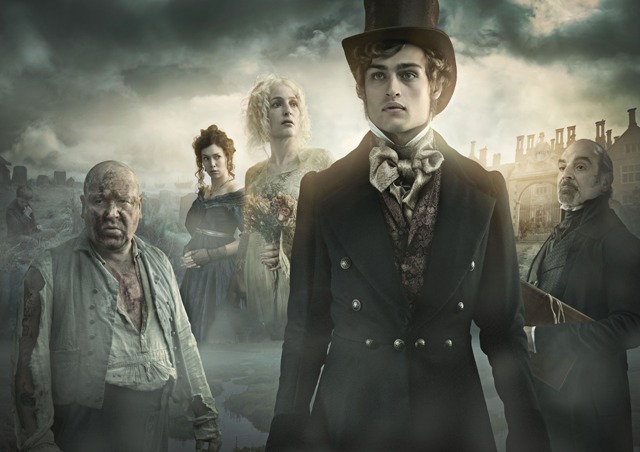
The mist on the marshes symbolise danger and uncertainty. From the very beginning of the novel and as interpreted in the BBC productions, there is terror right from the start as Pip is threatened by Magwitch on the marshes. From then on, the audience is warned by the appearance of mist and significantly when Pip travels to London after receiving his fortune, he has to go past mist, foreshadowing that an apparently positive development in his life may have dangerous consequences. 


> PARTING OF LOVERS 

From the very beginning, we, as the audience know that Estella and Pip belong together but Dickens creates tension within the text, Estelle appears as cold, cynical and manipulative but we do not question her love for Pip. 


> MYSTERY AND SUSPENSE

Dicken keeps us guessing, feeding us information little by little. The big reveal that Estella is actually Magwitch's daughter shocks us, this means that, Estella is ironically from a lower class system to Pip. 

Even to the end of the story, there is no real conclusion to whether Pip and Estella get together, leaving the ending in suspense and passed onto the readers' hands to decide. 


> COINCIDENCE IN EVENTS - ALMOST SUPERNATURAL IN NATURE 

Who would have thought that all these events taken place in the book and the cause of suffering and terror all originate from the one event in which a poor bride was left at the alter - all the central characters are somehow connected and important to the development of the story. 


>>>Back to defining the meaning of gothic

Gothic can be seen in different lights, varying from gothic novels to gothic architecture to gothic artwork such as paintings to clothing, objects, furniture and nature. 

The images below match my understanding of the general characteristics of the term Gothic. 

Available from: http://www.deviantart.com/art/mist-II-112097868
Last accessed: 16th Jan 2014
Gothic scenery is very important, used to achieve a dark mood. I chose a photo black and white photo of a path going into the woods. The mist is creepy, you can't see much ahead and gives you scary feeling that something sinister is waiting at the end of the road. Again, the feeling of uncertainty is evoked by the mists in 'Great Expectations'. 
Available from: http://marco-art.deviantart.com/art/Hide-and-seek-204662185
Last accessed: 16th Jan 2014 


This again, is a gothic setting. The detail on the staircase feels quite Victorian and the decaying and ageing of it reminds me of Miss Havisham's house.  
Available from: http://www.deviantart.com/art/Gothic-Revival-Chair-DETAIL-28438482
Last accessed: 16th Jan 2014
I found this, and immediately thought the pattern was very gothic, it reminds me of the detail you see in medieval churches, with the very angular arches and vertical design.

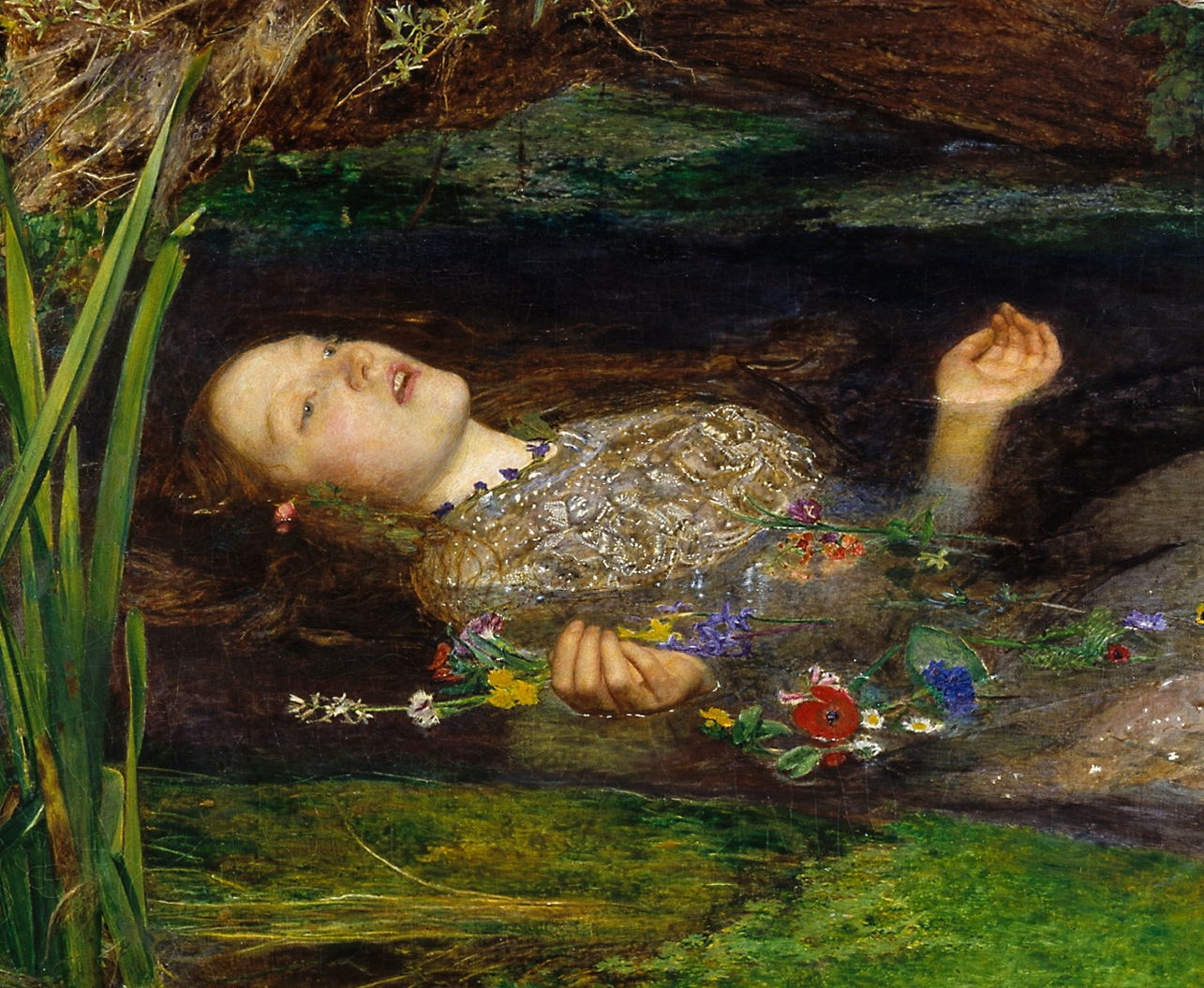
Ophelia Painting by John Everett
Available from: www.kingsgalleries.com Last Accessed: 20th January 2014
This is a very famous painting from the Victorian Era. Although bright colours are used, I feel that the actual subject of the painting is very gothic and morbid. 

Stiff pose Victorian postmortem photograph
Available from: www.mdolla.com Last accessed: 20th Jan 2014
Believe it or not this is a photograph of a corpse. It was a very popular form of art during the Victorian era. The dead were photographed so they could be remembered. Child mortality rates in the Victorian Era was high and sometimes, the only photos a family would have together were postmortem photographs. 
I find the one above extremely creepy, it is unnatural. Keeping the eyes of the dead open and propping them up with a stand is extremely twisted, dark and gothic.